
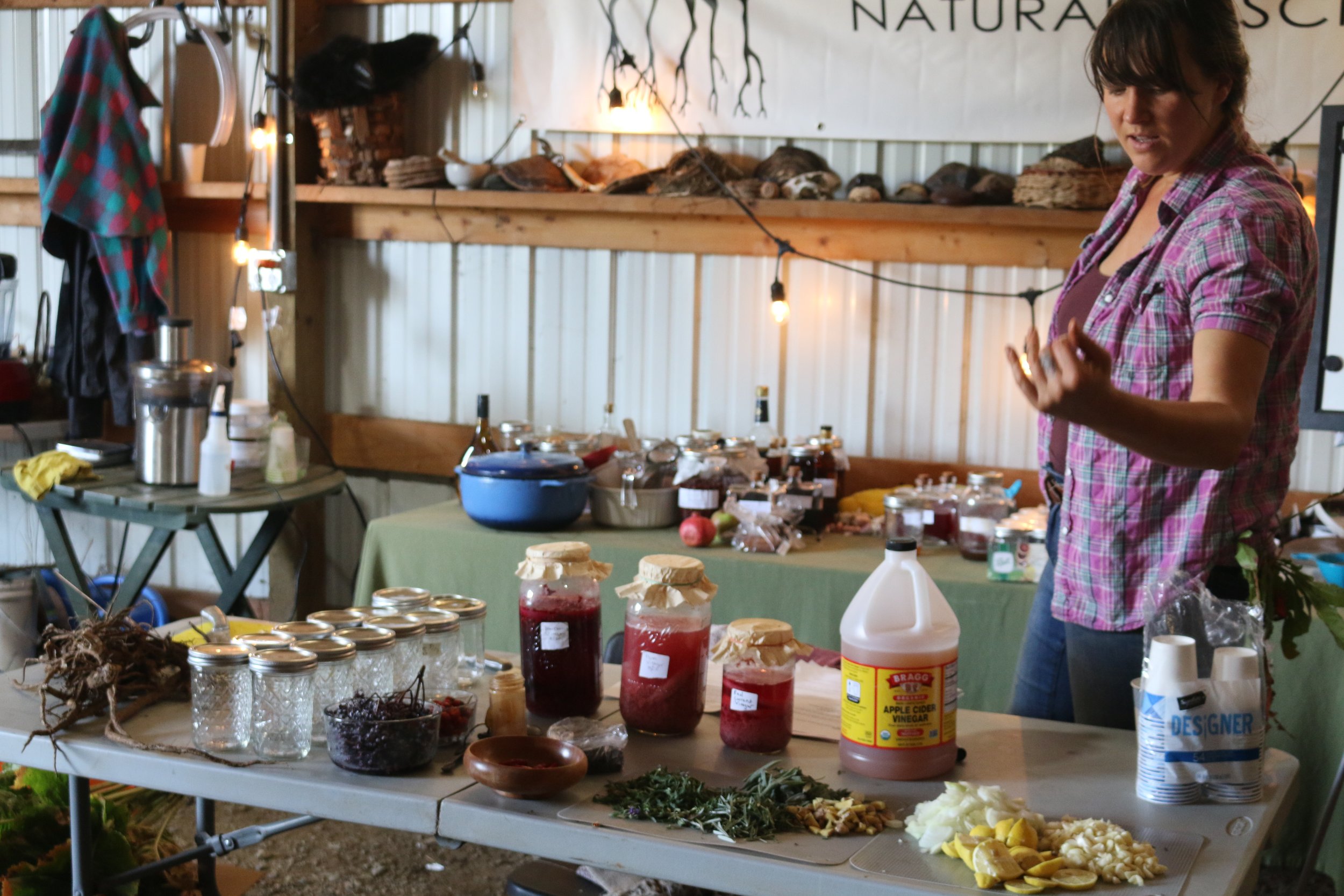
Wild Fermentation Immersion
Instructor: Gabe Garms
Dates: August 22-23, September 19-20, October 17-18, November 21-22
Cost: $1000 for full course or $300 for an individual weekend class
Locations: Both at field locations in and close to the Methow Valley, WA and at our residence in Twisp, WA
This is a hands on course that moves between field based learning and hands on fermentation work. Each weekend begins in areas in and close to the Methow Valley where we learn to identify plants and fungi, understand how they function within their ecosystems, and work with seasonal harvests as they become available. We also draw from foods grown by local farms and gardens to round out what we are fermenting.
A central part of this work is reciprocity. Before any harvesting takes place, students learn how each plant or fungi reproduces and how to support its continued growth through propagation, seed collection, and responsible harvesting practices. The goal is to engage directly with these systems in a way that supports their continuation over time.
From there, we move into fermentation work using a range of techniques including lactic ferments, wild beverages, vinegars, grain and legume ferments, and koji based foods. Rather than following fixed recipes, the focus is on understanding the principles behind each process so they can be applied to different seasonal and regional ingredients.
The course is structured around four weekends.
Weekends one through three follow a field to ferment format, moving from Saturday harvesting and plant study into Sunday fermentation sessions. Weekend four is a two day intensive focused entirely on koji and its applications.
Weekend structure (View complete schedule here):
The course is organized across four weekends.
Weekends one through three follow the same rhythm. Saturday is spent in the field in and around the Methow Valley learning plants, fungi, and seasonal harvests through identification, ecology, and responsible gathering practices. Sunday is spent in hands on fermentation work using the harvested ingredients along with foods from local farms and gardens.
Weekend four is a two day intensive focused entirely on koji. Over both days, students work with koji based fermentation systems, including miso, shoyu, amazake, shio koji, and related applications, and end the course with a shared fermentation potluck.
Full course (4 weekends): $1000
Individual weekends: $300 each (limited availability)
For full weekend details click here
What students receive:
Students leave with practical experience working with multiple fermentation techniques and seasonal ingredients, along with the confidence to continue these processes at home.
Each student receives:
A range of active fermentation cultures used throughout the course, including kombucha and jun SCOBYs, milk kefir grains, sourdough starter, koji culture, and tempeh starter
Fermented foods and beverages made during the weekends
Seeds and hardwood cuttings from selected edible and useful plants introduced during field sessions
Detailed notes covering techniques, control points, and fermentation processes used in class
Experience working with both wild and locally sourced ingredients using multiple fermentation techniques
A working understanding of how to grow, maintain, and continue these cultures at home
Students also learn how to identify, harvest, and propagate many of the plants studied during the course, allowing them to continue working with both wild and cultivated food systems beyond the classroom.
Enrollment:
This course is limited in size to maintain a small, hands on learning environment.
Full course (4 weekends): $1000
Individual weekends: $300 each (limited availability)






Reviews
“Their attention to detail and commitment to quality truly stood out. We’ve already recommended them to others.”
— Former Customer“Communication was top-notch and the final outcome was even better than we imagined. A great experience all around.”
— Former Customer“Every detail was thoughtfully executed. We're thrilled with the outcome.”
— Former Customer
People-First Approach
A Focus on Quality
Long-Term Relationships