
Wild Plant and Fermentation Intensive
This course meets one weekend per month for four months, beginning August 22-23, 2026.
For the first three weekends, students will spend Saturdays in the field and Sundays in the fermentation kitchen, learning how to identify, harvest, preserve, and transform the wild and cultivated abundance of the Methow Valley.
On Saturdays, we'll visit a variety of habitats throughout the region to learn how to identify edible and medicinal plants, mushrooms, berries, roots, seeds, and greens. Rather than simply teaching identification, we'll focus on understanding plant communities, ecology, seasonality, and ethical harvesting practices. Before harvesting any species, we'll discuss propagation and stewardship so that students learn how to contribute to the health and abundance of the landscapes they gather from.
Throughout the season we may encounter species such as porcini, bear's head, and hedgehog mushrooms, blue elderberries, serviceberries, chokecherries, mountain huckleberries, wild roots, medicinal herbs, and seasonal greens. The exact harvest will vary depending on weather, elevation, and seasonal conditions.
On Sundays, we'll bring our harvest back to the classroom in Twisp and explore the fermentation techniques best suited to the ingredients we've gathered. Rather than forcing ingredients into predetermined recipes, students will learn how to choose fermentation methods based on the qualities of the food itself.
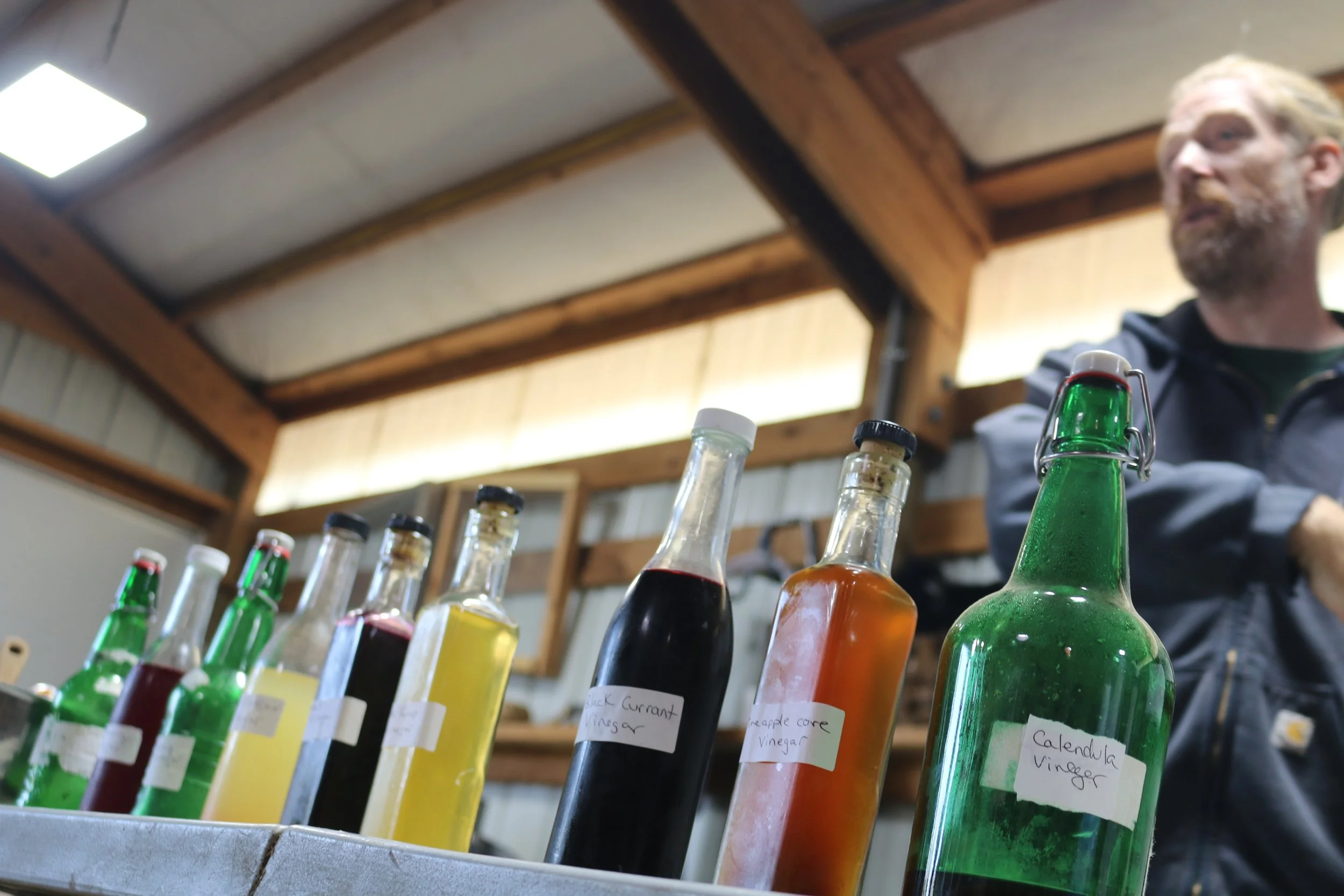
Wild berries and fruits may become kombuchas, jun, drinking vinegars, shrubs, and fruit vinegars. Wild greens, roots, vegetables, and herbs may be transformed into lacto fermented condiments, krauts, pickles, hot sauces, chutneys, and other preserves. Mushrooms may become fermented seasonings, condiments, or other culinary applications. Along the way, we'll explore the science of fermentation, flavor development, preservation, and how to incorporate local ingredients into traditional fermentation practices.
The fourth and final weekend shifts from wild harvesting to the fermentation of legumes and grains, focusing on some of the world's most transformative microbial processes.
During this intensive weekend, students will learn how to prepare and ferment beans, grains, and seeds using a variety of traditional techniques. We'll explore naturally fermented foods such as dosas, idlis, and acarajé, examining how fermentation improves flavor, texture, and digestibility.
We'll also learn to make tempeh and natto, including incubation techniques, troubleshooting, and how to successfully produce both at home.
The final day of the course is devoted entirely to koji, one of the most important fermentation cultures in the world. Students will learn how koji is cultivated, the enzymes it produces, and how it serves as the foundation for many fermented foods.
Using koji, we'll explore the production of shoyu, miso, amazake, and shio koji while tasting a variety of examples and discussing practical culinary applications for each. Students will leave with starter cultures, fermentation projects, recipes, and the knowledge needed to continue their fermentation journey long after the course concludes.
This course is designed for anyone interested in wild foods, food preservation, fermentation, self reliance, culinary experimentation, and developing a deeper relationship with the seasonal abundance of the Methow Valley.






Reviews
“Their attention to detail and commitment to quality truly stood out. We’ve already recommended them to others.”
— Former Customer“Communication was top-notch and the final outcome was even better than we imagined. A great experience all around.”
— Former Customer“Every detail was thoughtfully executed. We're thrilled with the outcome.”
— Former Customer
People-First Approach
A Focus on Quality
Long-Term Relationships